Inaugural Lecture – Professor Tony Nolan
- Video
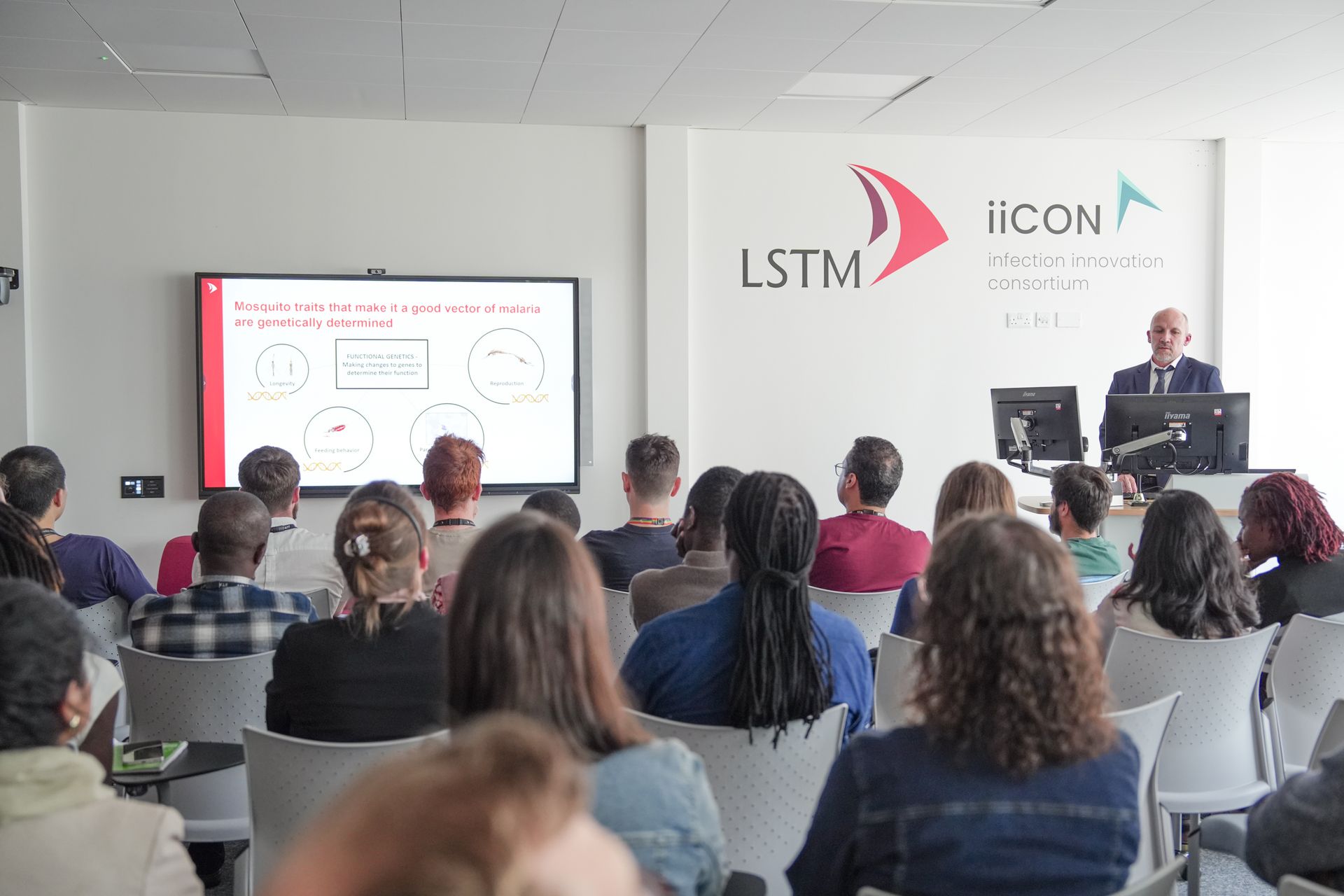
Editing a Species
The ability to genetically transform a species and study its genome opened up powerful ways to understand its biology. In malaria mosquitoes, this work not only supported better control strategies, but also enabled the introduction of genetic traits that reduced their capacity to transmit disease. Because mosquitoes themselves carried the trait, it offered the potential for a self-sustaining form of malaria control, accessible to communities at risk regardless of healthcare access or infrastructure.
Transformative technologies also raised understandable public concern. But Professor Tony Nolan explained that these questions were no longer theoretical. His team and collaborators had developed mosquito strains with the potential to reduce disease transmission.
In his inaugural lecture, he reflected on how he entered the field and the role he played in the discoveries that brought us to this point. He described a path shaped less by a grand masterplan and more by following the opportunities he found most interesting, supported by good mentors, curiosity, luck and resilience.
…